


Background
By the winter of 1944, many in the Allied ranks believed the war in Europe was nearing its end. German forces were in retreat, cities lay in ruins, and victory seemed only a matter of time. Yet, behind the quiet of the snow-covered Ardennes, the German Army was preparing one final, desperate gamble. In secret, divisions regrouped, tanks rolled through the forests at night, and orders were whispered for what would become their last great offensive of the war.
Known by several names—the Von Rundstedt Offensive, Wacht am Rhein, and most famously the Battle of the Bulge, the plan aimed to drive deep into Allied territory, capture the port of Antwerp, and split the advancing armies in two. If successful, it could have changed the course of the war. Heavy fog and freezing weather grounded Allied aircraft and left front-line units isolated in small villages across Belgium and Luxembourg—just as the German attack was about to begin.
On 16 December 1944, at 0500 hours in the pre-dawn darkness, the Germans launched a major counterattack on the First United States Army front along the Belgian—Luxembourg border, roughly fifty miles south of Aachen, Germany.
Under the command of General Gerd von Rundstedt, a German Panzer army struck against the 106th and 28th Infantry Divisions. The Allied lines were penetrated, and German forces poured into the Ardennes.
Trapped and with communication lines cut, the Allies faced a desperate situation. Their only option was to stay low and hold their ground. The attack created a critical communications crisis. It became impossible to build safe wire routes to VIII Corps Headquarters with existing construction troops.

16–18 December 1944
While German forces launched their surprise offensive on 16 December, Aachen—where the 40th was stationed—remained secure and served as a First Army rear hub. The battalion spent 16–18 December in the city, listening to reports of the Ardennes breakthrough, until orders on the 18th pulled them forward.
The initial days of the German offensive were brutal and merciless. SS troops of the 1st SS Panzer Division advanced through the Ardennes with orders to give no quarter. On 17 December 1944, at Baugnez near Malmedy, men of Kampfgruppe Peiper machine-gunned over a hundred captured American soldiers and executed the wounded where they lay. That same day, eleven Black artillerymen from the 333rd Field Artillery Battalion, who had sought refuge in the Belgian hamlet of Wereth, were betrayed to SS scouts, tortured, and killed. Their bodies, found weeks later, bore evidence of extreme brutality. Together, the Malmedy and Wereth massacres revealed the ruthless character of the Waffen-SS and the grim opening of the Battle of the Bulge.

Emergency Deployment of the 40th
Spa, the First Army's rear-area hub, was ordered evacuated on 18 December 1944, the same day First Army Headquarters decided to withdraw. Throughout late 1944, Spa served as the main communications center for First Army, with major installations concentrated in the Spa–Verviers–Liège triangle. The 35th Signal Construction Battalion was responsible for building and maintaining these vital communications lines from its headquarters at Spa, but had been ordered to retreat with the First Army.

The German offensive created a serious risk of severing all major communication routes within the breakout zone, splitting the Allied Forces in the north and the south.
At approximately 1200 hours on 18 December one company of the 40th was dispatched to establish emergency communication lines. The 40th became the only construction unit north of the Bulge, and one of very few Signal units still operating in the sector where communications were needed more urgently than ever before.
During these same hours, the larger battle was reaching a critical point. By December 19th, German forces had advanced twenty-five miles westward from St. Vith, and the most advanced German elements were approaching the Meuse River. The entire First Army command structure was being reorganized under combat conditions.
19 December 1944

Allied commanders met at Verdun, halting Rhine offensives to focus on the Ardennes. The 101st reached Bastogne, nearly encircled, while 82nd Airborne moved toward Werbomont and Meuse bridges were secured.
At 0130 hours, Major Cobb reported to the Signal Section, First Army, and was assigned Job No. 927: construct two spiral-four cables from Dinant to Neufchâteau —a distance of approximately 50 miles for Master circuits. Headquarters and B Company moved to Namur, Belgium, obtained ten truckloads of cable and supplies from Army Signal Depot No. 4 at Verviers, Belgium, and prepared to start work at daylight on 20 December. A Company was also assigned to the same job.
20 December 1944

Aachen itself was secure, serving as a rear logistics and communications hub after its capture in October. Montgomery assumed control north of the Bulge. U.S. divisions fought at Hotton and Stoumont, while the 101st reinforced Bastogne under pressure.
Namur, at the junction of the Sambre and Meuse, became a key rear base that day. Engineers secured the bridges, command staffs set up posts, and the 40th arrived from Aachen to collect cable and supplies for the urgent new trunk lines. Though the German spearheads were still some distance east, Namur was already braced as a potential breakout target and critical point in the Meuse defense.
Job No. 927 began with B Company starting construction. Company A moved from Aachen, Germany to Namur, Belgium, picked up six truckloads of cable at Depot No. 4, and prepared for work the following day.
21 December 1944

Bastogne was fully surrounded. 82nd Airborne fought along the Amblève, 30th Division held near La Gleize, and First Army reorganized to contain the thrust.
The rapidly changing battle situation forced immediate changes. On December 21st, VIII Corps was removed from First Army command, and VII Corps was moved from the left flank to the right flank—a massive reorganization reflecting the desperate tactical situation.
At 1200 hours, the 40th was ordered to stop work on the Dinant-Neufchâteau cables when Job No. 927 was about 90% complete—they had been so close to finishing when the German breakthrough shattered the front lines.
During this same period, the town of Bastogne was being encircled. The official history notes that "communication between the VIII Corps headquarters and the St. Vith command post was almost nonexistent, even by radio." The 40th's emergency redeployment was occurring as American forces were being cut off and isolated across the entire Ardennes front.
The entire battalion prepared to move again. At 2200 hours, they moved out to rendezvous near Bommershoven, Belgium—a distance of approximately 40 miles—spending the balance of the night in their vehicles. The enemy had weather as an ally: fog, snow, and icy roads became additional obstacles to battle.
At about midnight, Major Cobb received new orders to construct three spiral-four cables from Huy PTT to a point approximately eight miles south of Huy, connecting with construction teams of the 3rd Signal Construction Battalion attached to VII Corps. The exact location of VII Corps was unknown at the time. One platoon was also ordered to assist the 35th Signal Construction Battalion in establishing a new Army Command Post near Tongres (Dutch: Tongeren; French: Tongres), Belgium.

22 December 1944

St. Vith forces withdrew under pressure. At Bastogne, McAuliffe rejected surrender with his famous "Nuts!" as Third Army began moving north.
At Huy on the Meuse, there was no direct fighting, but the town's PTT facility and river crossings made it a vital hub. U.S. engineers tightened bridge security, and signal troops, including the 40th, laid spiral-four cables to ensure First Army's lines stayed connected. While the main battles raged around Bastogne and the Amblève valley, Huy's role as a secure communications node was crucial in blocking any German attempt to reach the Meuse.
By 0600 hours, plans were complete, and by daylight all teams were ready to start work. The following jobs were completed:
- Job No. (No Number): Master-Maroon Air, 1 Spiral-four Cable, approximately 3 miles
- Job No. 939: Master-VHF Site, 5 Spiral-four Cables, approximately 2 miles
- Job No. 940: Huy PTT (Belgian postal, telegraph, and telephone facility)-Jayhawk, 3 Spiral-four Cables, approximately 3 miles
One section assisted the 35th Signal Construction Battalion in placing twenty-five-pair cables from FK-2 terminal near Tongres (Dutch: Tongeren; French: Tongres) to the Master wire head (the main hub where all communication lines connected before reaching switchboards and equipment). All teams worked until 2200 hours, with bright moonlight making night work feasible.

23 December 1944

Clear skies allowed Allied planes to resupply Bastogne and strike German columns. Germans pushed near Manhay, while 2nd Armored organized defense around Dinant and Buissonville.
Work continued on placing 5-pair cables.
- Job No. 941: Master-Huy PTT, 2 Spiral-four Cables, approximately 25 miles
One of these cables (No. 330) was completed at 2300 hours.
24 December 1944

British 30 Corps' 29th Armoured Brigade fought German spearheads Dinant–Ciney while U.S. engineers tightened Meuse bridge security; simultaneously the 40th began rehabilitating six open-wire circuits on the Tongres–St.Trond route and continued the Master–Huy PTT spiral-four build—making Tongeren/St. Trond an active comms corridor behind the Meuse screen.
The following jobs were completed:
- Job No. 941: Master-Huy PTT Spiral-four Cables (continued)
- Job No. 956: Master-Security Command, 1 Field Wire, approximately 2 miles
- Job No. 962: Master-F & PW HQs., 2 Field Wires, approximately 2 miles
Work began on rehabilitating six open wire circuits on existing German pole lines between Tongres (Dutch: Tongeren; French: Tongres) and St. Trond, connecting these circuits to wireheads at each end with spiral-four cable.
All of this was accomplished despite the fog, snow, and icy roads that plagued every movement and made the dangerous work even more treacherous.

25 December 1944

British 30 Corps was deployed along the Meuse (Givet→Liège); XVIII Airborne shortened its line Trois Ponts–Manhay and 2nd Armored seized Celles, blunting the western tip of the thrust.
The 40th tied the rehabbed line into Master Rear at St. Trond with Job 959 (3 × spiral-four)—cementing St. Trond as a rear signal node. One platoon from A Company and three officers were temporarily attached to the 50th Signal Battalion (VII Corps) to assist with spiral-four and field wire construction in the Corps rear area.
- Job No. 959: Master-Master Rear, 3 Spiral-four cables, approximately 6 miles
This cable connected the end of rehabilitated open wire to Master Rear at St. Trond. Open wire rehabilitation was also completed.
26 December 1944

Relief of Bastogne was achieved as 4th Armored reached Assenois. German spearheads fell short of the Meuse under air attack. First Army stopped the westward drive short of the Meuse.
Overnight the 40th ran Red Line Test–Macadam (2 × spiral-four, ~21 miles), a trunk that meshed with the Meuse-belt network fed through Tongeren/St. Trond.
- Job No. 983: Red Line Test-Macadam, 2 Spiral-four Cables, approximately 21 miles
This job was completed at 0100 hours on the 27th, with teams returning to battalion area at 0500 hours on the 27th.
During the Battle of the Bulge, test sets were indispensable tools for signal troops like the 40th. These portable instruments were used to check, locate, and repair faults in field telephone and trunk lines under combat conditions.
A test set combined a hand-cranked generator, receiver, transmitter, and meter in one compact case. It allowed linemen to verify line continuity, detect shorts or grounds, check battery polarity, and test voice circuits before connecting telephones or switchboards.

27 December 1944

The Northern sector of the Bulge stabilized while the 83rd Division moved up, relieving 2nd Armored in the Havelange area and the Bastogne corridor widened.
Meanwhile, the 40th added Master–Master Rear Wire (~15 miles) on existing German poles—keeping traffic flowing via the St. Trond rear switch.
- Job No. 979: Master-Master Rear, 1 Spiral-four Cable, approximately 15 miles
28 December 1944
Eisenhower and Montgomery met at Hasselt to plan the counterattack. German assaults on Elsenborn Ridge failed as VII Corps repelled infiltrators near Sadzot, while the 83rd Division fought at Rochefort. These setbacks marked the collapse of German offensive momentum. The 40th finally paused after days of nonstop work: equipment was cleaned, and the men were able to wash up and rest.
29 December - 8 January 1945

First Army held firm on the northern shoulder while Third Army pushed from Bastogne toward Houffalize. British XXX Corps relieved 2nd Armored along the Meuse line, securing the crossings.
The 40th began Job No. 980, building a 20-wire open line from Master to Red Line Test (about 17 miles) using dismantled German poles and local sources.
- Job No. 980: 20-wire open wire line built from Master to Red Line Test, approximately 17 miles
All poles were obtained by dismantling German lines or from local sources found by the Battalion.
Post-Battle Reconstruction Work
After the immediate crisis of the Bulge had passed, the 40th continued critical reconstruction work in the battle-scarred region. According to their troop movement records, the Battalion was stationed in Vielsalm, Belgium from 31 January to 10 March 1945—a key location that had served as a withdrawal route during the St. Vith fighting in December.


The original battalion history notes additional challenges during this period: "The Germans had destroyed more than half of the Aubange—Jemelle line. While the enemy had been pushed back, the ice and snow remained."
One particularly hazardous mission took the Battalion from Spa to St. Vith to restore communications in the devastated area. As winter gave way to spring, conditions remained treacherous with mud, broken roads, and minefields complicating every job.
Recognition and Legacy
The 40th proved itself under fire during those critical weeks, accomplishing what seemed impossible as the only construction outfit north of the Bulge. Their work was done so well and so quickly that they received a letter of commendation from the Signal Officer of the First United States Army—recognition of extraordinary service when Europe's fate hung in the balance.
Troop Movements During the Battle 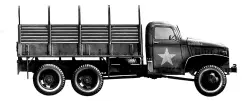
| Location | Dates |
|---|---|
| Aachen (Aix-la-Chapelle), Germany | 11 Dec 44 – 19 Dec 44 |
| Namur, Belgium | 19 Dec 44 – 21 Dec 44 |
| Tillier, Belgium | 21 Dec 44 – 22 Dec 44 |
| Bommershoven, Belgium | 22 Dec 44 – 12 Jan 45 |
| Verviers, Belgium | 12 Jan 45 – 16 Jan 45 |
| Welkenraedt, Belgium | 16 Jan 45 – 31 Jan 45 |
| On, Belgium (B Company) | 18 Jan 45 – 6 Feb 45 |
| Vielsalm, Belgium | 31 Jan 45 – 10 Mar 45 |