

Breaking Through the Siegfried Line
With the German offensive in the Ardennes finally broken, Allied forces resumed their eastward advance toward Germany in early 1945. Intensive bombardments preceded the 1st Army's advances as Allied forces prepared for the final push into Germany.
The 1st Army advanced into Jülich, Linnich, and Neuss, with the intense fighting leaving these strategic cities heavily damaged.

Advance into the Rheinland

The 40th Battalion re-entered Germany through Belgium in 7 March 1945, when U.S. forces seized the Ludendorff ('Big B') Bridge at Remagen, immediately facing one of their most dangerous assignments. First, they constructed an open wire lead—an overhead telephone line strung between poles to carry multiple voice and telegraph circuits—from St. Vith, Belgium, to Prüm, Germany. During the surveying work, Lt. Wood was injured by a German mine left behind near the Siegfried Line.
From March 10 to March 25, 1945, the battalion undertook the perilous task of clearing a path through the Siegfried Line minefields west of Prüm to permit construction of an open wire line. This dangerous work required extraordinary skill and courage as they encountered a large number of German mines while advancing through Hitler's primary defensive barrier.
Ultimately the Ludendorff Bridge collapsed on 17 March 1945 after ten days of heavy use and damage and by that time the Allied bridgehead was secure and expanding. After the collapse, Allied forces continued crossing the Rhine using nearby pontoon and treadway bridges that engineers had already built, allowing their advance into Germany to proceed without delay.
Bliealf lay deep in the Eifel region, a rugged, forested area that had just been cleared after intense winter fighting during Operation Grenade and the drive toward the Rhine. When the 40th arrived, the town was largely in ruins, roads cratered, bridges down, and snow and mud still present.
By late March, Signal units were operating in the Ruhr–Lower Rhine corridor, behind the spearheads of the U.S. Ninth Army. Sasserath, near Mönchengladbach, had fallen with minimal resistance, and large-scale combat was now east of the Rhine.
Here, Signal Construction Battalions focused on heavy cable laying, switchboard setup, and connecting forward command posts preparing for the Rhine crossings. Conditions had improved — roads were usable, enemy air activity minimal, and civilians began to emerge again.
However, logistical pressure was high: miles of line had to be strung rapidly to maintain contact with divisions crossing into the Ruhr Pocket, where fierce fighting awaited. Ahead lay the industrial heartland of Germany and the major encirclement battle that would break German resistance in the west.

Spanning the Rhine at Bingen
As spring arrived, the 40th tackled their most ambitious project yet: an aerial cable job at Jülich. This involved a suspended cable line strung between poles and towers. They followed this with an open wire line from north of Jülich to Mönchengladbach.
The next open wire project stretched thirty-two miles from Bad Kreuznach to Wiesbaden.
Of that distance, 1,745 feet crossed the Rhine River at Bingen—a crossing of extraordinary strategic and technical significance.


To span the mighty river, the 40th used the infamous Mouse Tower (Mäuseturm) as their anchor point. This medieval stone tower, rising from a small island in the treacherous Bingen Narrows, had controlled Rhine river traffic since Roman times. For centuries, it served as a toll collection point where officials extorted tribute from passing ships—those who refused faced archers positioned on its walls.

Working under intermittent enemy fire and facing immense construction challenges, the battalion had to haul materials and poles more than 100 miles by truck to the bomb-damaged railyard at Bingen. The span ran from the west bank to the legendary Mouse Tower, then to an island, then across the remaining distance to the east bank—where they had to laboriously haul equipment up steep slopes to German defensive positions blasted by Allied bombing.
The entire 32-mile project was completed in just 15 days, with the Rhine crossing representing the first open aerial wire across the Rhine River—a feat that enabled the transmission of approximately fifty simultaneous messages between Allied commands. The 40th had once again earned the distinction of achieving a historic first, demonstrating remarkable technical skill and courage under the most demanding conditions.


Supporting the Final Push
The Allied armies,particularly the United States Seventh and Third Armies, crossed the Rhine River, and captured cities such as Heilbronn and Nuremberg after intense fighting, and then fanned out across southern and central Germany. Once organized German resistance collapsed and white flags began appearing over towns by late April , American units transitioned from combat to occupation duties.
With communications secured in the western regions, the 40th continued their vital work as the Allied advance accelerated. They laid spiral-four cable around Wiesbaden and completed projects near Königsberg and Erlingen. Following the rapid Allied push eastward, the battalion constructed a thirty-mile open wire lead connecting Frankfurt to Langgöns.The roads were congested with Allied convoys and displaced civilians, and crews worked under fuel shortages and debris-strewn terrain to re-establish stable communications across newly occupied Hesse.

In the war's final weeks, they began their longest project yet—a thirty-seven-mile line from Ensler toward Nuremberg — but victory came before its completion.
The 40th arrived to Nuremberg in early May. The city’s civil administration was suspended, and Allied Military Government officers began taking control of police, utilities, and food distribution. U.S. Army engineers cleared major roads of rubble and unexploded ordnance, while medical units treated civilians and prisoners of war.

On May 8, 1945, the war in Europe finally ended. Allied forces entering Germany were caught between relief and responsibility: they moved through a defeated, shattered nation whose armies had capitulated, aware that the fight was over yet faced immediately with the enormity of occupation and reconstruction
From Victory to Occupation
By late May, the atmosphere was largely calm. U.S. troops performed routine maintenance, trained replacements, and relaxed compared with the hectic weeks of April. However, they still dealt with refugee flows, food shortages, and occasional accidents with unexploded ordnance. Even after victory, the Battalion remained active, laying lines to support the occupying troops.
On May 25, 1945, the unit was reorganized under a new Table of Organization and Equipment (T/O & E) as the 40th Signal Light Construction Battalion, reflecting their transition to peacetime duties.
The headquarters of the Twelfth U.S. Army Group moved from Verdun, France, to Wiesbaden, Germany, on 1 May 1945, with the main and rear echelons arriving on 4 May and the tactical echelon on 1 June. The move marked the transition from combat to occupation duties. Wiesbaden, captured largely intact, provided secure facilities, functioning utilities, and reliable communications for the new administrative phase. From there, the headquarters directed military government support, maintained security, and oversaw redeployment after Germany's surrender.

The last assignment was an open wire lead from Nuremberg toward Munich. Veitsbronn and Schwarzenbruck were calm by May, and signal battalions there supported the establishment of U.S. airfields, war‑crimes infrastructure and community headquarters.
Analysis — Shadowing Headquarters Moves
The 40th's projects in 1945 mirrored the forward relocation of 12th Army Group Headquarters. As HQ shifted from Verdun to Luxembourg and then Wiesbaden, the battalion's work at Sasserath, Bingen, Seligenstadt, and Friedrichsdorf provided the communication backbone needed at each new site.
Their ability to move quickly, string wire under combat conditions, and deliver operational networks on short timelines demonstrated how adaptable they were in supporting a highly mobile command structure.

Troop Movements 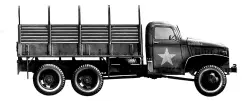
- On, Belgium (B Co) — 18 Jan 1945 to 6 Feb 1945
- Vielsalm, Belgium — 31 Jan 1945 to 10 Mar 1945
- Bleialf, Germany — 10 Mar 1945 to 20 Mar 1945
- Sasserath, Mönchengladbach, Germany — 20 Mar 1945 to 30 Mar 1945
- Bingen, Hessen, Germany — 30 Mar 1945 to 20 Apr 1945
- Rüdesheim, Hessen, Germany — 4 Apr 1945 to 20 Apr 1945
- Seligenstadt, Germany — 20 Apr 1945 to 22 Apr 1945
- Friedrichsdorf, Germany — 22 Apr 1945 to 7 May 1945
- Veitsbronn, Nordbayern, Germany — 7 May 1945 to 31 May 1945
- Schwarzenbruck (near Nuremberg), Germany — 31 May 1945 to 28 Jun 1945