

On 6 June 1944, 160,000 Allied troops stormed the Atlantic Wall at six main strategic points on the beaches of Normandy.
Even after one month of fighting, only the northern tip of Normandy was in Allied hands. The slow progress resulted from the region's unique terrain—the bocage—which comprised centuries-old hedgerows: earthen embankments three to twelve feet high, topped with dense thornbushes and trees, that enclosed small irregular fields.
These hedgerows created natural defensive positions that severely limited Allied mobility, tank operations, and artillery effectiveness, while allowing small German units to pin down much larger Allied forces in deadly close-quarters combat. Allied planners had overlooked this critical terrain feature, and troops received no specialized training for hedgerow warfare, turning the campaign into what historians call "the battle of the hedges" or "hedge war" that lasted from D-Day until the end of August 1944.


5–6 July 1944 – Crossing and Landing
The 40th departed from England at 2200 hours on 5 July 1944. By early July, enemy coastal batteries had been largely neutralized, but the remains of the American Mulberry, an artificial harbour at Omaha, lay shattered following the 19–21 June storm.
After the June storm, the Allies reverted to unloading over the open beach, so incoming convoys like the 40th’s approached anchorages marked by buoys and were met by control craft which directed them into position.
After an uneventful crossing, the convoy arrived at Omaha Beach, Normandy, at approximately 1200 hours on 6 July. Debarkation occurred between 1400 and 1650 hours the same day.

Upon arriving at Omaha Beach, soldiers encountered a beach transformed into a gigantic logistical hub. Salvage operations continued, with cranes and bulldozers clearing wreckage and engineers processing thousands of tons of supplies daily.
The Battalion then moved to Vehicle Transit Area Number Four, Omaha Beach, to de-waterproof vehicles and set up a night bivouac.
The arrival of the 40th on Omaha Beach coincided with the first stages of the 12th Army Group Headquarters' transfer from England to the Continent. Higher command elements began crossing on 5 July, aligning the battalion's deployment with the broader establishment of an operational foothold in Normandy.

7–9 July 1944 – Valognes and St. Côme-du-Mont

At approximately 1440 hours on 7 July 1944, the unit proceeded in motor convoy to a bivouac area two miles west of Valognes, Normandy, arriving at about 1730 hours. The Battalion remained there, along with the attached 257th Signal Construction Company, until 9 July 1944.
The battalion's initial combat assignment was outlined to the Commanding Officer, Major Tilton D. McNeal. On 9 July at 0750 hours, the Battalion moved to a bivouac area one-half mile east of St. Côme-du-Mont, Normandy, to be centrally located for its mission.
By moving into position at Valognes and then St. Côme-du-Mont, the battalion set the stage for incoming staff elements. Civil Affairs and administrative echelons of 12th Army Group were scheduled to arrive from mid-July onward, and the 40th's communications role ensured that command and support units entering Normandy could immediately tie into reliable lines.
10–14 July 1944 – First Combat Assignment
On the morning of 10 July 1944, the Battalion began its first wire construction job under combat conditions. The task was a twenty-pin open wire line from Ht. Chemin ("Haute Chemin" - French for "High path") to St. Côme-du-Mont, designed to connect First United States Army to First Army Rear, VIII Corps, and VII Corps. This new line replaced an existing one between St. Côme-du-Mont and Carentan along the railroad, which was under enemy fire.
To avoid enemy artillery, the new line was routed north across the lowlands between Carentan and the English Channel. Much of this area had been flooded by the Germans on D-Day, creating marshland and complicating construction.
This terrain, known as the Bocage, was difficult to work in and required the line to be built well off roadways to reduce risk from traffic and enemy action. The initial survey was made on 9 July 1944, and the entire 15.5-mile line was completed and handed over to the First Army Signal Service on 14 July 1944.

The completion of the Ht. Chemin–St. Côme-du-Mont line on 14 July 1944 directly paralleled the redesignation of Headquarters First US Army Group into Headquarters 12th Army Group. This signal work provided the critical framework for the new command's operational communications as it assumed control of the expanding American effort in France.
The battalion's early work took place in an environment where logistical support was still tenuous. Although Cherbourg had been captured in late June, its port facilities were only gradually restored, limiting supply flow into Normandy. In this period of strain, reliable communications lines—such as those constructed by the 40th through flooded lowlands and bocage terrain—were essential for maintaining command cohesion during the Allied buildup.

Troop Movements 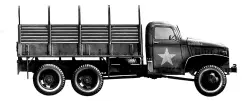
- LSTs 1359, 1360, 1361, U.S. Navy – 5–6 July 1944
- Vehicle Transit Area #4, Omaha Beach, Normandy – 6–7 July 1944
- St Come du Mont and Carentan sector, Normandy – 10–14 July 1944