

During the Second World War the U.S. Army built large embarkation centers to stage men and materiel before crossing the Atlantic. One of the busiest was Camp Shanks in Orangeburg, New York. Constructed in 1942–43 on 2,040 acres of former farmland and orchards, the camp was nick‑named “Last Stop USA” because it was often the final American soil a soldier saw before shipping overseas.
By the fall of 1943 and winter of 1944 the camp was operating at full capacity, processing thousands of troops each week. Soldiers arrived by secret trains, were registered, medically cleared, equipped and entertained while they waited for their transports.
On 18 January 1944, the 40th boarded the USS Susan B. Anthony (AP-72).


By January 1944, over 750 000 U.S. army personnel were in Britain. Farmland was requisitioned for dumps, and new camps and airfields were built across South Wales and southwest England.
After a ten-day journey, the 40th disembarked at Newport,Wales on the 28th January 1944, and traveled to Eynsham Park, near Northleigh, Oxfordshire. There, the entire battalion was garrisoned in Nissen huts – semi‑cylindrical huts originally designed in 1916 for the British Army.
Although conditions were basic, the location afforded some comforts. Eynsham Park’s wooded grounds allowed for training exercises and provided a degree of privacy compared with open tent camps. Soldiers were free to leave the camp when off duty, and many visited the nearby villages of North Leigh and Long Hanborough or cycled into the university city of Oxford.
Eynsham Hall, the estate adjoining their camp, had a distinguished history as a Jacobethan mansion built between 1906-1908, replacing an earlier Georgian house. The estate's existing infrastructure—including its own electric generating station, waterworks, gas plant, and private telephone system—made it an ideal choice for military use, providing both seclusion from potential Luftwaffe raids and the communications infrastructure essential for signal corps training.
The American command attempted to impose U.S. Jim‑Crow rules on British soil, yet Welsh citizens, accustomed to a more racially mixed society, often resisted. In some Welsh towns separate pubs were designated to prevent fights; however, numerous locals befriended black soldiers and considered them polite and generous. However, many black GIs remembered Britain fondly because of the respect shown by civilians and because they could socialise more freely than at home.


From February to June 1944, their time was devoted to intensive training in wire construction, including the battalion's introduction to British multi-airline construction methods. They also trained in mine detection and deactivation, attended lectures on minefields and booby traps, and ran field problems to simulate combat conditions.
During this period, individual companies were deployed to specialized training locations. Company B was stationed at Middleton Stoney, Oxfordshire from 24 February to 29 March 1944, where they continued field cable installation and mine detection training in the open farmland and hedgerows near RAF Upper Heyford. Simultaneously, Company A was detached to Leatherhead and Staines, Surrey from 11 March to 29 March 1944, where they likely observed amphibious Sherman tank trials being conducted at Staines Reservoir as part of preparations for D-Day landing operations.

On 26 April 1944, the battalion was placed on alert for movement overseas in preparation for the liberation of Europe. Eynsham Park remained their base, and morale was high. "Salute the Soldier Week", a nationwide British fundraising campaign to support Army equipment and boost civilian morale, took place during this time. Although organized to support the British Army, American troops also participated. On 2 June 1944, the battalion marched in the inaugural parade at Long Hanborough, a village in Oxfordshire.
In late May, elements of the battalion including Company A undertook specialized anti-aircraft training at Stiffkey Range in Norfolk from 27 May to 31 May 1944. At this coastal range, they observed British gunners practicing deflection shooting against remote-controlled drone targets launched from a unique circular "whirlygig" launching pad. The signalmen installed field communication lines linking gun crews to command posts and experienced maintaining communications under the noise and danger of live artillery practice—valuable preparation for the conditions they would face in combat.
On 6 June 1944 (D-Day), more than 160,000 Allied soldiers landed on the beaches of France. Although a beachhead was secured, fierce German resistance and bad weather slowed progress.
This bottleneck delayed many signal corps units, including the 40th, as the front lines had not yet stabilized enough to safely begin large-scale communication construction work. For nearly a month, the battalion remained at Eynsham Park awaiting deployment orders.


On 2 July 1944, at 23:45, the battalion left Eynsham Park by motor convoy for the marshaling area near Dorchester, England, a journey of about 130 miles. Rain fell for the entire nine-hour trip.
After the 40th's departure, Eynsham Hall was temporarily occupied by a U.S. medical detachment before being converted into a rest and recuperation center. The estate became a "flak house" (officially designated as Station 587), operated by the American Red Cross for battle-weary airmen recovering from combat missions.
On the 5th of July 1944, the battalion was divided into craft loads for embarkation at Portland Harbour, Dorset, on the south coast of England. With over 550 men, the battalion was too large for a single vessel and had to be split across three ships. The first load departed on LST 1359 (Landing Ship, Tank) at 01:45, followed by LST 1360 at 02:50, and LST 1361 at 06:50.
Troop Movements 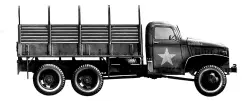
- Arrived Newport, South Wales — 28 Jan 1944
- Eynsham Park, Oxfordshire — 29 Jan to 2 Jul 1944
- Middleton Stoney, Oxfordshire (Company B) — 24 Feb to 29 Mar 1944
- Leatherhead and Staines, Surrey (Company A) — 11 Mar to 29 Mar 1944
- Anti-Aircraft training, Stiffkey Range, York — 27 May to 31 May 1944
- Marshalling Area 1/RCRP/4 — 3 Jul to 5 Jul 1944
- LSTs 1359, 1360, 1361 (U.S. Navy) — 5 Jul to 6 Jul 1944