

Capellen, Luxembourg (3 October – 5 November 1944)

During October, the First Army pressed toward Aachen while the Third Army held the Moselle line further south. Civil Affairs detachments were already preparing to move into Germany as the front lines approached its borders. Luxembourg City became a rear-area hub for the advancing armies.
The U.S. Army's First Army (part of Twelfth Army Group) at this time fielded eight divisions supported by engineer, signal, quartermaster and other service units—over 256,000 officers and men. These units accompanied the combat divisions across France into Belgium and Luxembourg.
The Duchy of Luxembourg was the next stop for the Battalion. Luxembourg was already integrated into Allied rear area support functions. The 40th's work through Capellen tied into this, reinforcing the communication corridor extending into Belgium.
On 2 October, they moved 25 miles northeast to the village of Capellen. Companies were billeted in two large mansions and a caretaker's house, formerly used by the Germans as schools. The billets were well equipped and comfortable.
While in Luxembourg, the battalion built an 8-mile, 10-circuit lead from Garnich east to the city of Luxembourg, terminating at Twelfth Army Group Tactical (TAG) headquarters. This job started on 6 October and finished on 9 October. Their next task was a 27-mile line from south of Arlon, Belgium, north to Bastogne. No suitable bivouac sites could be found along the line, so operations continued from billets in Capellen. The line was completed without incident on 25 October. The following days were spent policing the build and servicing equipment.

Liège, Belgium (5–22 November 1944)
In early November, VII Corps of the First Army (1st Infantry Division, 26th Infantry Division) fought inside Aachen while XIX Corps pushed east toward the Roer River. These were the first sustained penetrations of Germany by U.S. forces.
In Liège, the Allies established forward depots and signal centres. The city's railways and roads supported the First Army's assault on the German frontier, while signal units rehabilitated underground cables and maintained communications during the tense autumn months and the later German counter‑offensive. The city at this time was a key logistical hub for the First Army as well as a communications center. The 40th's work there sustained critical lines under heavy V-1 bombardment, highlighting the city's importance despite constant danger.


On the 5th of November, the Battalion moved north from Capellen to Chênée, Belgium. They were billeted in school buildings. The assigned task was a ten-circuit double-arm lead (a heavy-duty telephone line with crossarms extending from both sides of each pole to support multiple wire circuits) from Liège, Belgium, to Aachen, Germany. The distance was about 27 miles. The Battalion worked the western end of the line until 22 November.
From these billets, Company B continued on the Aachen–Liège build. Company A took over a 14-mile line from Maastricht east to Heerlen, Netherlands. This line had been begun by the 459th Signal Construction Battalion but was left incomplete when they were reassigned.
Historic Achievement: The 40th earned the distinction of building the first open wire aerial line into Germany by the Allied Forces with the completion of the Liège–Aachen line — a pioneering accomplishment that would establish vital communications as the Allies prepared to cross into the German heartland.

On 19 November, the Germans began dropping V-1 flying bombs on Liège, only three miles away. The V‑1/V‑2 counter‑attack on Liège and other Belgian cities between 19 November and early December 1944 was a desperate attempt by the Nazi regime to disrupt Allied supply lines and sow panic among liberated populations. While the Germans hoped to destroy the U.S. First Army’s depots at Droixhe and the fuel dump on Île Monsin, the inaccuracy of the weapons meant that civilians suffered most, with hundreds killed and thousands injured in Liège alone.
The Allies quickly adapted by dispersing their supplies and improving camouflage, reducing the strategic effect of the bombardment. Nevertheless, the period left a deep scar on the city: residential streets like Avenue Blonden, rue Cornillon and rue des Artisans became synonymous with tragedy, and the blast at the 15th U.S.General Hospital remains one of the deadliest attacks on U.S. medical personnel during World War II.
Between 20–21 November, 45–50 bombs fell on Liège and surrounding towns, including Chênée and Beyne-Heusay.
On 22 November, Headquarters, Headquarters Company, and Company B moved 25 miles northeast to Epen, Netherlands. This was a quiet town seven miles west of Aachen, Germany.
Epen, Netherlands (22 November – 11 December 1944)
By late November, U.S. forces held bridgeheads east of Aachen and were pressing toward the Roer River. The front remained static while supply build-up continued for further attacks.
South Limburg served as a logistical hub for the 9th U.S. Army. Communications groups installed switchboards and cables between Maastricht, Heerlen and the 9th Army's headquarters, ensuring that the flow of supplies and reinforcements could be controlled from Luxembourg and later from newly occupied German cities.
The region’s road and rail network, intact airfields, and proximity to the German border made it ideal for supply depots, command posts, and hospital centers supporting operations toward the Roer River and the Ruhr. The Ninth Army’s headquarters was formally established in Maastricht on 7 December 1944, from where it directed logistical coordination for the First and Twelfth Army Groups through the winter campaign.


In the Netherlands, the move into Epen and surrounding villages coincided with a static front where major operations were stalled. Communications projects like the Maastricht–Heerlen and Aachen builds laid groundwork for eventual renewed offensives.
Company A remained in Chênée until 25 November. They then moved to Mheer, a village in the Netherlands. They continued work on the Maastricht–Heerlen line until 6 December, when it was completed and turned over to Twelfth Army Group.
Company B completed the Aachen–Liège build on 30 November, but not without incident.
On 27 November, while working in Aachen, a K-43 line construction truck (a specialized vehicle equipped with pole-setting augers and wire-stringing equipment) ran onto a German Teller mine.
The right front wheel assembly was blown off. The fender, windshield, and windows were shattered, but the driver, Tec 5 Thomas McKinley, was uninjured.
That same day, a V-1 bomb hit Company A's line near Mickeroux, Belgium, destroying one pole and damaging spans in both directions.

The Battalion's next assignment was the Aachen–Cologne line, part of which extended into enemy territory. On 5 December, Company B began surveying around Aachen. They started from the last pole of the Liège–Aachen line and circled north of the city.
Aachen, Germany (11–19 December 1944)
Through December, XIX Corps and VII Corps divisions (104th, 30th, 2nd Armored) were positioned around Aachen preparing for crossings of the Roer.
On 11 December, Headquarters and Headquarters Company moved from Epen, Netherlands, to Aachen, Germany, for what was expected to be a month's stay. Company A moved from Valkenburg, Netherlands, to Brand, Germany, on 8 December. They joined Company B the next day on the Aachen–Cologne build. As work progressed east of Aachen toward Düren, mines slowed progress until Engineers cleared safe paths for survey crews.
Despite steady progress, the offensive slowed by the first week of December. Mud, destroyed roads and heavy German counter-attacks hindered supply convoys. The 12th Army Group's ammunition stocks were being depleted; its pre-offensive plan warned that major operations could continue only until mid-December. Some artillery units rationed shells, and infantry divisions were rotated to quieter sectors to rest.
By mid-December, the First and Ninth Armies held positions along the Roer but could not advance. Weather remained poor, supply lines were overstretched, and the Hürtgen Forest fighting continued.
The British and Canadians had only recently opened the port of Antwerp (first ship arrived 28 November), so supply through Belgium was still limited. Bradley's warning proved accurate: after 15 December offensive operations largely halted while the armies consolidated for a future Roer crossing. Many divisions were sent to quiet sectors in the Ardennes to recuperate, leaving a relatively thin defensive line.

Troop Movements 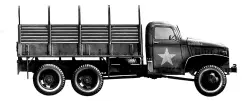
- 3 Oct – 5 Nov 1944: Capellen, Luxembourg
- 5 Nov – 22 Nov 1944: Liège, Belgium
- 22 Nov – 11 Dec 1944: Epen, Netherlands
- 11 Dec – 19 Dec 1944: Aachen, Germany